


Visit Korea
You may witness UNESCO cultural treasures and K-culture around Korea, including Seoul, the country's capital for 600 years. If you plan to explore Korea, we recommend some excellent tourist sites.
Seoul
AMWC Korea is held in Seoul, Korea's capital. Public transportation allows you to explore all of Seoul's tourist attractions.
There are numerous tourist attractions, activities, and dining options in Seoul, but we will highlight a few of the most notable.
Gyeong bok gung Palace
-min.jpg)
The largest palace built during the Joseon Dynasty, founded in 1395. Geunjeongjeon (勤政 殿), the main hall of Gyeongbokgung Palace, is National Treasure No. 223 of the Republic of Korea. You can enter for free if you properly put on traditional Korean clothes, known as hanbok.
[Transportation information]
Approximately 471m (9-minute walk) from Exit 2 of Gwanghwamun Station on Line 5
Approximately 216m (6-minute walk) from Exit 5 of Gyeongbokgung Station on Line 3
Chang deok gung Palace
-min.jpg)
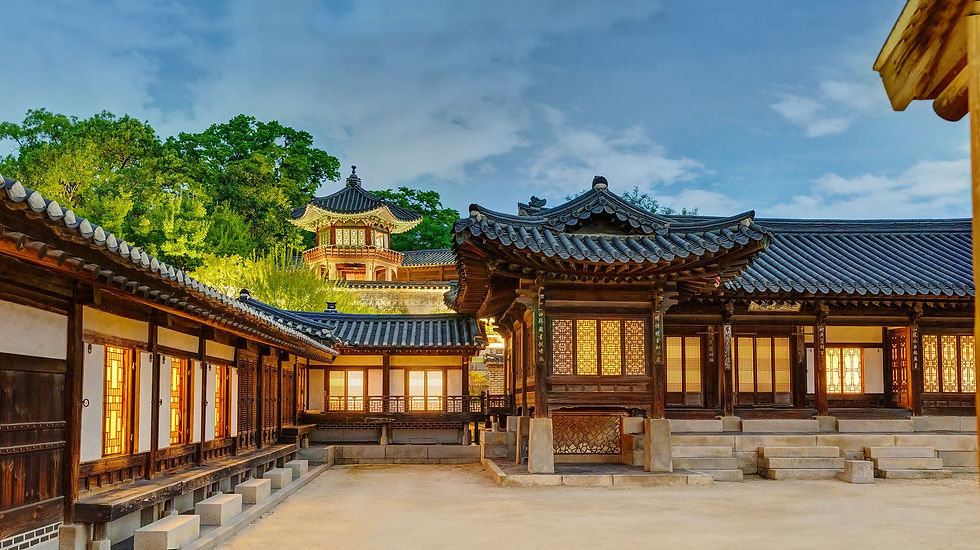
Changdeokgung Palace was built in 1405 and was designated as a UNESCO World Heritage Site for its architectural beauty. In particular, the beauty of Okryucheon Stream and Buyongji Pond are must-see points.
[Transportation information]
Approximately 389m (6-minute walk) from Exit 3 of Anguk Station on Line 3

Located between Gyeongbokgung Palace and Changdeokgung Palace, Bukchon is a representative residential area of Seoul that is largely composed of traditional Korean house(hanok). The name Bukchon, which means 'North Village',originates from the fact that it is situated to the north of Cheonggyecheon Stream and Jongno Street.
[Transportation information]
Approximately 485m (6-minute walk) from Exit 2 of Anguk Station on Line 3
N Seoul Tower

Namsan Seoul Tower, once recognized as the number one tourist attraction chosen by foreigners, is a tower located at the top of Namsan Mountain in Seoul and can be considered a symbol of Seoul. It is especially perfect for viewing the beautiful night view of Seoul.
[Transportation information]
Take circular bus No. 01 (Namsan Circular) from Chungmuro Station on Lines 3 and 4 or Dongdaemun Station on Line 3, get off at 'Namsan Seoul Tower' stop and walk approximately 357m (8-minute walk)
Bongeunsa Temple

Located across from Samseong Station, this is a representative temple in Seoul with a history of 1,000 years. It houses various relics and allows visitors to experience the temple’s daily life through temple stays.
[Transportation information]
About 135m (2-minute walk) from Bongeunsa Station on Line 9
COEX Mall (Venue)

COEX Mall is the largest underground shopping mall in Asia. In addition to the shopping mall, it also has an aquarium and Byeolmadang Library, attracting numerous visitors throughout the year.
[Transportation information]
Connected to exits 5 and 6 of Samseong Station on Line 2
Recommended travel destinations outside of Seoul
Korea is easily accessible to other regions via high-speed trains like as KTX and SRT, as well as express buses.
If you have adequate time, we recommend exploring areas outside of Seoul as well.

Gapyeong, Gyeonggi-do
1. Namiseom Island
Namiseom is a small island located in the midst of the Bukhangang River. It is well-known as the filming location for the Korean drama "Winter Sonata" and has become a popular tourism attraction for Hallyu enthusiasts. The island is not accessible by land, but it can be reached via cruise ship or zip wire.
2. The Garden of Morning Calm
Namiseom is a small island located in the midst of the Bukhangang River. It is well-known as the filming location for the Korean drama "Winter Sonata" and has become a popular tourism attraction for Hallyu enthusiasts. The island is not accessible by land, but it can be reached via cruise ship or zip wire.
Yongin, Gyeonggi-do
1. Korean Folk Village
Korean Folk Village, created in 1974, is Korea's first traditional culture theme park, including a variety of traditional Korean dwellings. The Korean Folk Village offers a variety of traditional performances, experiences, and food, as well as opportunities to learn about Korean traditional culture.
2. Everland
Everland is Korea's iconic theme park. Every season brings with it a variety of festivals, sights, animals, and flora.


Gangneung, Gangwon-do
1. Jeongdongjinhaebyeon, Beach
Gangwon-do embraces the East Sea, which is Korea's most beautiful sea. In particular, the sunrise over the East Sea will be an unforgettable sight. Also, Jeongdongjin Train Station is the world's closest train station to the sea.
2. Arte Museum Gangneung
Arte Museum is a permanent immersive media art exhibition space. In a 5,000-square-meter venue, you may view 12 vibrant media art displays. The superb loudness, visual intensity, and unique aroma provide an ideal immersive experience.
Gyeongju, Gyeongsangbuk-do
1. Seokguram Grotto
The Seokguram Grotto is a UNESCO World Heritage Site and a national asset of South Korea. Seokguram Grotto is the world's only man-made grotto, created in the eighth century and survived for almost a millennium.
2. Bulguksa Temple
It is a UNESCO World Heritage Site, alongside Seokguram Grotto, and serves as the heart of Silla's magnificent Buddhist culture. Bulguksa Temple, built during the Silla Dynasty with the hope of bringing stability and peace to the nation, suffered the plundering or destruction of many of its valuable cultural assets and treasures during the Imjin War, but through continuous restoration and repair, it now houses seven Republic of Korea national treasures.


Jeju Island
Jeju Island is a popular and representative tourist destination for Koreans. Jeju Island boasts a spectacular natural landscape produced by volcanoes, as well as a variety of themed experience centers for people of all ages. The breathtaking dawn from Seongsan Ilchulbong, a UNESCO World Heritage Site, the dazzling blue sea, diverse beaches, fresh seafood dishes, and a variety of delicacies will leave all visitors with unforgettable memories.